

URL Coupon vs Regular Coupon: Which Is Better for Marketing?
Written by Md Ferdous Hassan Alin. Posted in Coupon, WooCommerce, WordPress No Comments
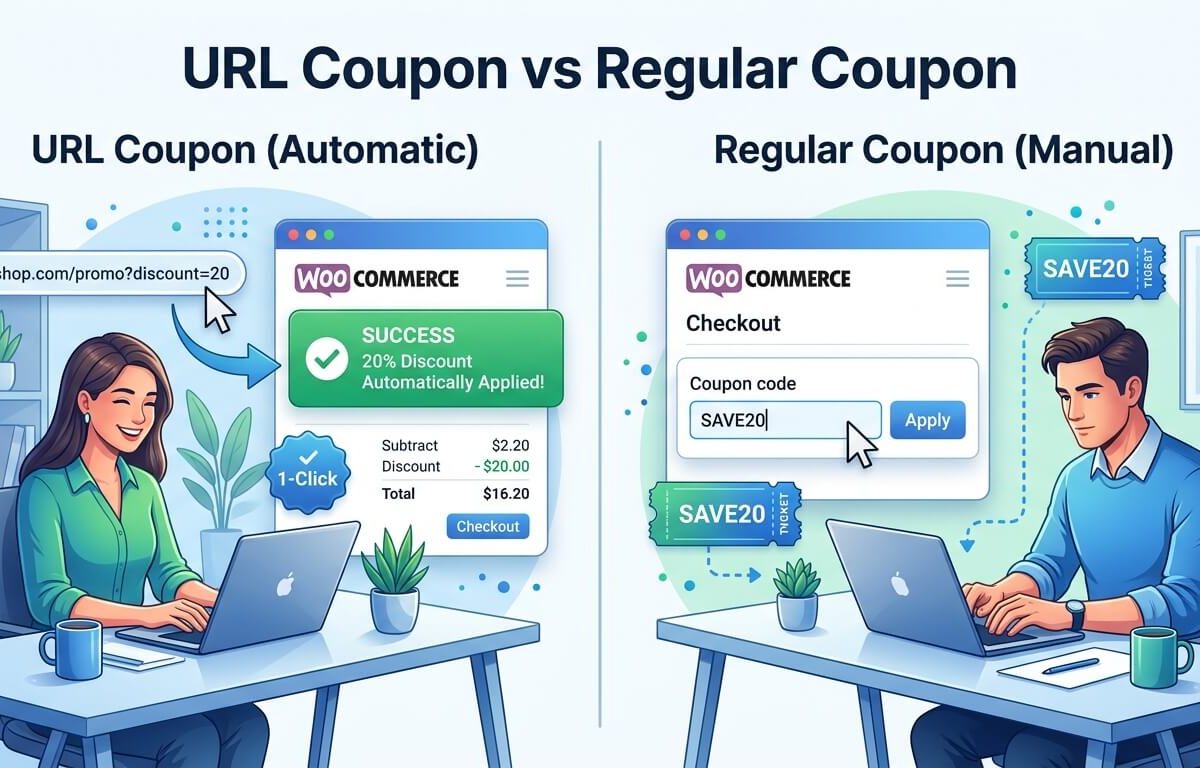
URL Coupon vs Regular Coupon is a comparison many eCommerce store owners eventually face when planning discount campaigns. While both methods help increase sales, improve conversions, and attract customers, they work in different ways and are suited to different marketing channels.
Coupons remain one of the most commonly used marketing tools in eCommerce. Whether a business wants to attract new customers, recover abandoned carts, encourage repeat purchases, or increase average order value, discounts often play a significant role.
However, not all coupons work the same way.
Today, store owners can choose between traditional coupon codes and newer URL-based coupon systems. Understanding the difference between these approaches can have a direct impact on campaign performance and customer experience.
In this guide, we’ll compare URL Coupon vs Regular Coupon, explain how each option works, identify their strengths and weaknesses, and discuss where each method fits into a modern marketing strategy.
Throughout the article, we’ll also explore how Vite Coupon & Voucher can help WooCommerce store owners manage both discount campaigns and vouchers from a single platform. The plugin supports various coupon types, including URL coupons, BOGO offers, conditional promotions, scheduling, and vouchers.
Understanding Regular Coupons
Regular coupons are the traditional discount codes customers manually enter at checkout.
Examples include:
- SAVE10
- WELCOME20
- SUMMER25
- FREESHIP
The customer receives the code through email, social media, advertisements, or website banners and then enters it during checkout.
How Regular Coupons Work
A typical process looks like this:
- Merchant creates a coupon code.
- Customer receives the code.
- Customer adds products to the cart.
- Customer enters the code manually.
- Discount is applied if conditions are met.
This method has been used by online stores for many years because it is simple and familiar.
Understanding URL Coupons
URL coupons remove the need to manually enter coupon codes.
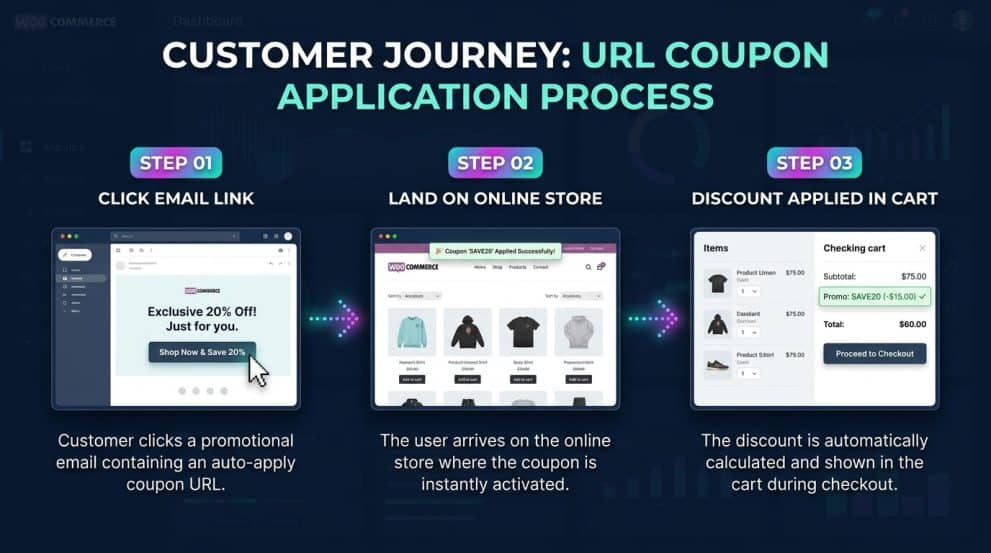
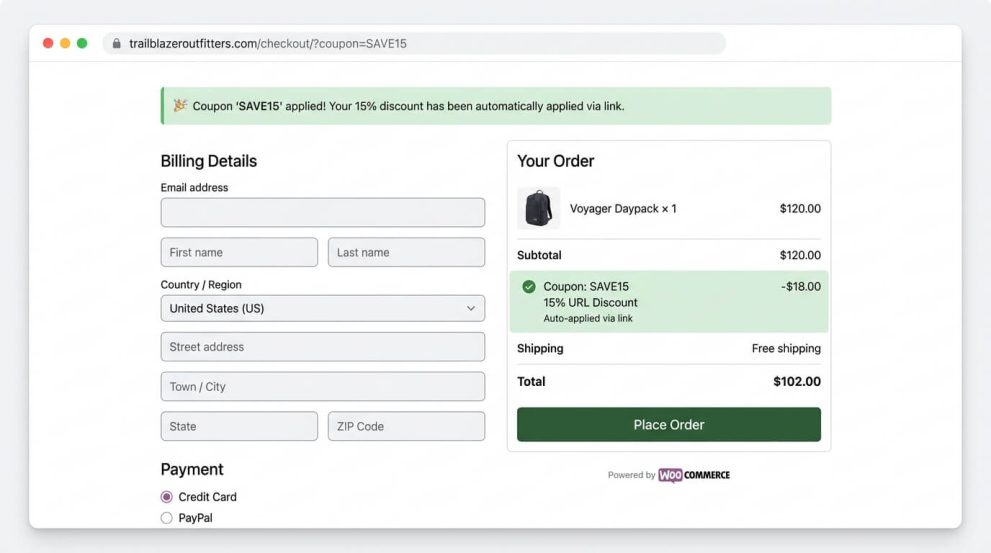
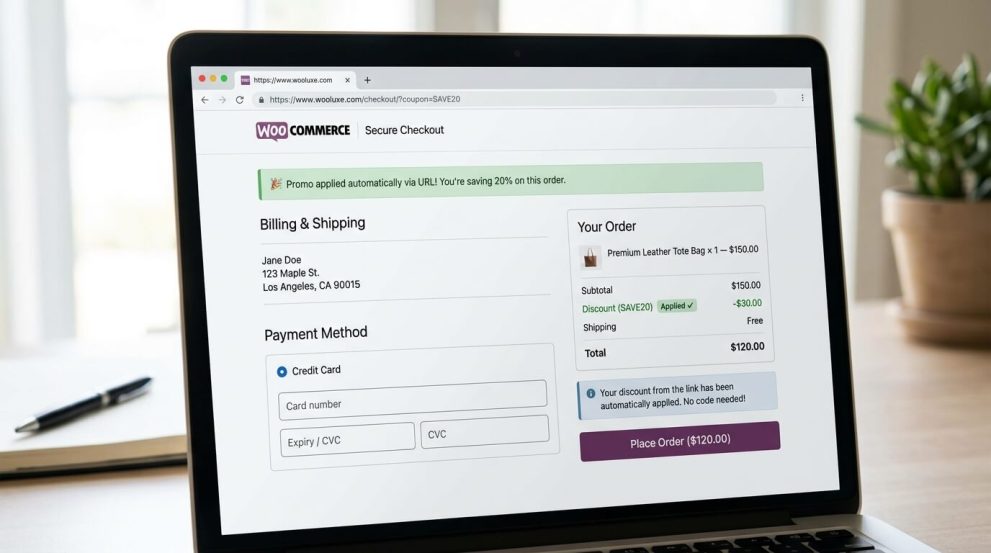
Instead of giving customers a coupon code, the store provides a unique URL. When users click the link, the discount is automatically applied.
Example:
https://store.com/?coupon=SUMMER20
When customers arrive through the promotional link, the coupon is automatically activated.
According to the Vite Coupon feature documentation, URL coupons allow customers to redeem special discounts simply by clicking a specific link. [appsbd.com]
This creates a smoother experience because the customer does not need to remember or enter a code.
URL Coupon vs Regular Coupon: Quick Comparison
| Feature | URL Coupons | Regular Coupons |
|---|---|---|
| Manual code entry | No | Yes |
| User convenience | High | Medium |
| Email campaign performance | High | Medium |
| Social media promotions | Excellent | Good |
| Offline marketing | Limited | Excellent |
| Shareability | High | Medium |
| Tracking specific campaigns | Easy | Moderate |
| User error risk | Very Low | Higher |
| Checkout friction | Minimal | Moderate |
| Familiarity | Growing | Very High |
Why Coupon Selection Matters
Many store owners focus on discount size and forget about the redemption process.
However, even a valuable offer can underperform if customers encounter friction before claiming it.
Common problems include:
- Customers forgetting the coupon code
- Typing errors
- Confusion about eligibility
- Coupon expiration misunderstandings
- Mobile users struggling during checkout
Reducing friction often increases coupon usage rates.
This is one reason URL coupons have become increasingly popular in modern WooCommerce coupon marketing campaigns.
Advantages of URL Coupons
1. Faster Customer Experience
A customer clicks a promotional link and receives the discount immediately.
No copy-paste steps. No manual entry. No remembering coupon codes.
This creates a streamlined shopping experience.
2. Better Mobile Conversion Potential
Mobile users frequently move between apps, emails, and browsers.
During this transition, many users forget coupon codes.
URL coupons solve this issue because the discount travels with the click.
For stores with significant mobile traffic, this can reduce abandonment during checkout.
3. Easier Campaign Tracking
Because each URL can be associated with a specific marketing channel, stores can monitor campaign performance more precisely.
Examples:
- Newsletter campaign
- Facebook promotion
- Influencer partnership
- Affiliate program
- Retargeting advertisement
Marketing teams gain clearer attribution data.
4. Improved Email Marketing Performance
Email promotions benefit significantly from direct coupon links.
Instead of asking users to:
- Read email
- Copy code
- Visit website
- Enter code
they simply click a button.
This reduction in steps can improve campaign efficiency.
5. Better User Experience
Customers increasingly expect convenience.
URL coupons remove unnecessary actions and create a smoother shopping journey.
Limitations of URL Coupons
Despite their benefits, URL coupons are not suitable for every situation.
Limited Offline Usability
Traditional printed materials often work better with coupon codes.
Examples:
- Flyers
- Newspaper advertisements
- Product packaging
- Physical events
Typing a short code may be easier than entering a long URL.
Coupon Sharing
Customers can easily share promotional URLs.
This may be beneficial for viral marketing campaigns but problematic for exclusive campaigns.
Businesses should implement restrictions where needed.
Link Management Requirements
Marketing teams must maintain and monitor campaign URLs carefully.
Broken links can negatively impact promotion performance.
Advantages of Regular Coupons
1. Familiarity
Customers already understand coupon code systems.
Most online shoppers have used traditional discount codes before.
No learning curve exists.
2. Strong Offline Marketing Support
Regular coupons perform well in offline environments.
Examples include:
- Trade shows
- Packaging inserts
- Business cards
- Printed catalogs
A short code such as “SAVE15” is easy to remember.
3. Easy Brand Reinforcement
Coupon codes can support branding efforts.
Examples:
- WINTERSALE
- NEWCUSTOMER
- VIP20
- BLACKFRIDAY
These codes communicate the promotion’s purpose while remaining memorable.
4. Controlled Distribution
Store owners often have greater control when distributing coupon codes through selected channels.
Limitations of Regular Coupons
User Errors
Customers may:
- Misspell codes
- Forget codes
- Enter expired coupons
- Use incorrect capitalization
Each issue introduces friction.
Increased Checkout Abandonment
The coupon field can create hesitation.
Some customers stop purchasing because they begin searching for better discounts online.
This behavior can lower conversion rates.
Additional User Actions
Every additional step increases the risk of abandonment.
Manual coupon entry adds friction compared with automated discount application.
Which Coupon Type Performs Better for Different Marketing Goals?
Goal: Increase Email Campaign Conversions
Best Choice: URL Coupons
Reason:
Customers can activate the offer with a single click.
Goal: Run Social Media Promotions
Best Choice: URL Coupons
Reason:
Users click directly from:
- X
The discount follows the user automatically.
Goal: Distribute Discounts Through Flyers
Best Choice: Regular Coupons
Reason:
Short, memorable codes work better in print.
Goal: Affiliate Marketing
Best Choice: URL Coupons
Reason:
Performance tracking becomes easier.
Goal: In-Store Promotions
Best Choice: Regular Coupons
Reason:
Store staff and customers can quickly reference standard coupon codes.
When Should You Use Both Together?
The answer is often both.
Many successful stores create multi-channel strategies using both coupon formats.
Example:
| Channel | Coupon Type |
|---|---|
| Email Marketing | URL Coupon |
| Facebook Ads | URL Coupon |
| Influencers | URL Coupon |
| Flyers | Regular Coupon |
| Product Packaging | Regular Coupon |
| Trade Shows | Regular Coupon |
Using both approaches allows businesses to optimize each channel individually.
The Role of a Coupon Management System
Managing multiple campaigns manually becomes difficult as stores grow.
Businesses often struggle with:
- Coupon organization
- Expiration management
- Campaign scheduling
- Performance monitoring
- Usage restrictions
- Voucher tracking
A dedicated coupon management system helps centralize these tasks.
How Vite Coupon & Voucher Supports Coupon Marketing
The Vite Coupon & Voucher plugin is designed for WooCommerce stores that require more flexibility than basic coupon functionality.
Product Page:
vite coupon and voucher
According to the official product information, Vite Coupon supports: [appsbd.com], [wordpress.org]
- URL coupons
- Scheduled promotions
- Buy One Get One (BOGO)
- Buy Two Get One (BTGO)
- Buy One Get Two (BOGT)
- Buy Many Get Many (BNGN)
- Conditional promotions
- WooCommerce coupon integration
- Voucher management
The plugin also integrates with VitePOS. [appsbd.com], [vitepos.com]
Rather than creating separate systems for each promotion type, merchants can manage campaigns within a single dashboard.
Step-by-Step: Using URL Coupons Effectively
Step 1: Define the Marketing Objective
Choose a goal:
- Increase sales
- Promote new products
- Acquire subscribers
- Recover abandoned carts
- Reward loyalty customers
Step 2: Choose Audience Segments
Create targeted campaigns.
Examples:
- First-time customers
- Returning customers
- VIP buyers
- Newsletter subscribers
Step 3: Create a Dedicated URL Coupon
Assign campaign-specific links for tracking purposes.
Step 4: Distribute Through Marketing Channels
Possible channels include:
- Social media
- Affiliate partners
- SMS campaigns
- Landing pages
Step 5: Monitor Results
Track:
- Clicks
- Redemptions
- Conversion rates
- Revenue generation
Common Mistakes to Avoid
Using One Coupon for Every Channel
Separate campaigns provide cleaner analytics.
Ignoring Mobile Experience
Most traffic now comes from mobile devices.
URL coupons often perform better on mobile due to reduced friction.
Poor Expiration Management
Expired promotions create confusion and customer complaints.
Use scheduling tools whenever possible.
Creating Complex Conditions
Customers should understand promotional requirements easily.
Keep offers simple.
Not Testing Coupon Links
Always test:
- Desktop devices
- Mobile devices
- Guest checkout
- Logged-in users
before launching campaigns.
URL Coupon Marketing Strategy Tips
For businesses implementing URL coupons, consider these recommendations:
Use Dedicated Campaign URLs
One URL per campaign simplifies reporting.
Add Tracking Parameters
Track promotion performance using campaign parameters.
Pair Coupons with Landing Pages
Customized landing pages improve message consistency.
Limit Coupon Abuse
Use restrictions when promotions are intended for specific audiences.
Test Before Launch
Verify functionality before distributing links.
External Resources
For additional information about WooCommerce coupon functionality:
- WooCommerce Coupons Documentation (nofollow): https://woocommerce.com/document/coupon-management/
- WordPress Plugin Directory for Vite Coupon (nofollow): https://wordpress.org/plugins/vite-coupon/ [wordpress.org]
FAQ
In most cases, yes. They reduce steps in the customer journey because users can activate discounts with a single click.
Yes. Several WooCommerce coupon tools support URL-based discount activation, including Vite Coupon.
Regular coupons are often better for printed materials, offline advertising, in-store promotions, and campaigns where memorable codes are useful.
Yes. Many businesses use URL coupons for digital marketing and regular coupon codes for offline marketing channels.
A voucher system allows stores to issue prepaid value codes that customers redeem later. Vite Coupon introduced a voucher module alongside its coupon functionality
Conclusion
When comparing URL Coupon vs Regular Coupon, there is no universal winner.
URL coupons generally provide a smoother experience for digital marketing campaigns, especially email marketing, affiliate promotions, paid advertising, and social media campaigns. They reduce friction, improve convenience, and simplify campaign tracking.
Regular coupons remain useful for offline marketing, branded promotions, and situations where customers need a memorable discount code.
For many WooCommerce stores, the most practical approach is using both methods based on channel requirements.
If your business wants to manage URL coupons, traditional coupons, conditional discounts, scheduled promotions, BOGO campaigns, and vouchers from a single system, Vite Coupon & Voucher provides these capabilities within WooCommerce and VitePOS environments.