
Appsbd

software license management​

Software License Management​: Top Tools and Tracking Methods

Understanding Software License Management​

What Is Software License Management?

Imagine running a large company with hundreds—or even thousands—of software tools powering daily operations. Every tool has its own rules, pricing model, and usage limitations. Without proper organization, chaos quickly follows. This is where software license management enters the picture.

At its core, software license management is the process of tracking, organizing, and controlling the usage of software licenses within an organization. It ensures that businesses are using software legally, efficiently, and cost-effectively. Think of it like managing a digital inventory. Instead of counting physical products in a warehouse, you’re counting software permissions—who can use them, how many licenses exist, and whether they’re being used properly.

Businesses today rely heavily on digital tools. From productivity platforms to development frameworks, organizations often manage hundreds of software applications simultaneously. According to recent industry research, companies worldwide may manage over 200,000 unique software titles across enterprise environments, making license management a critical IT responsibility.

Without structured managing software licenses, organizations risk overspending, compliance penalties, and operational inefficiencies. Software vendors frequently audit companies to ensure licensing compliance. If a business is found using more licenses than purchased—or using software improperly—it could face significant fines.

Software license management is not just about avoiding penalties. It’s also about maximizing efficiency. When organizations know exactly what software they own and how it’s used, they can optimize spending, remove unused licenses, and make smarter technology investments.

Software License Managemen

Why Managing Software Licenses Matters for Businesses

Many companies underestimate the importance of license software management until problems appear. Imagine paying for dozens of software subscriptions that no one actually uses. Or worse, imagine your organization failing a vendor audit because you unknowingly exceeded license limits.

Proper software license tracking protects organizations from these risks. It provides visibility into every software asset within the company. IT teams can see which applications are active, who is using them, and whether the organization remains compliant with licensing agreements.

One major benefit of effective license management is cost optimization. Businesses often overspend on software simply because they lack clear tracking systems. For example, employees may request additional licenses while unused ones remain dormant in the system. Over time, this leads to thousands—or even millions—of dollars in wasted software spending.

Compliance is another crucial factor. Many software providers conduct periodic audits to verify proper usage. Companies that fail these audits may face unexpected penalties or forced licensing upgrades. With structured software license management software, businesses can quickly generate compliance reports and avoid legal complications.

Security also plays a role. Unauthorized or pirated software introduces serious risks to corporate networks. By maintaining a centralized license tracking system, organizations ensure that only approved software is installed across their infrastructure.

Ultimately, software license management empowers businesses with transparency. When companies clearly understand their software environment, they can reduce costs, maintain compliance, and support long-term digital growth.

The Growing Importance of License Software Management

Market Growth and Industry Trends

The importance of software license management software has increased dramatically in recent years. As companies adopt more digital tools, managing licenses becomes increasingly complex. From SaaS subscriptions to on-premise applications, modern IT environments contain a vast ecosystem of software assets.

Industry reports show that the software license management market is expanding rapidly. In 2025, the market is expected to reach around $3.3 billion and could grow to nearly $12.9 billion by 2035, representing strong long-term growth.

Several factors are driving this growth.

First, organizations are adopting more cloud-based software. SaaS platforms allow businesses to scale quickly, but they also create subscription sprawl. Without proper tracking systems, companies may lose visibility over how many licenses they actually use.

Second, regulatory compliance requirements are becoming stricter. Governments and software vendors increasingly demand transparent reporting of software usage. Companies must maintain accurate license records to avoid legal issues.

Third, artificial intelligence and automation are transforming the license management landscape. Modern tools now use intelligent analytics to identify unused licenses, forecast future needs, and automate compliance checks.

Experts also note that over 60% of enterprises now implement Software Asset Management frameworks to gain control over their software spending and compliance processes.

These trends make one thing clear: license management is no longer optional. It has become a fundamental part of IT governance and financial optimization.

Challenges Businesses Face Without License Tracking

Without proper license tracking software, organizations face several common challenges. The first is software sprawl. When different teams purchase tools independently, duplicate applications quickly appear across the organization. Multiple departments may pay for similar tools without realizing it.

Another challenge is lack of visibility. Many companies rely on spreadsheets or manual processes to track licenses. These systems are error-prone and quickly become outdated. As employees join, leave, or change roles, software usage patterns shift constantly.

Compliance risks are also significant. If a company unknowingly exceeds license limits, vendors may impose heavy penalties during audits. These unexpected costs can disrupt budgets and damage vendor relationships.

Operational inefficiencies are another problem. IT teams may spend hours manually reconciling license data, verifying compliance, and updating records. This time could be better spent on strategic initiatives.

Finally, poor license management leads to unnecessary spending. Organizations often renew subscriptions automatically without evaluating whether they are still needed. Over time, unused licenses accumulate like forgotten gym memberships—quietly draining the company budget.

Implementing dedicated software license management software solves these challenges by automating tracking, reporting, and compliance monitoring.

Types of Software Licenses

Perpetual Licenses

Perpetual licenses represent the traditional model of software ownership. In this model, companies purchase a license once and can use the software indefinitely. This approach was historically common with desktop software applications such as office suites or design tools.

With perpetual licensing, organizations pay a one-time fee for the right to use a specific version of the software. Updates, maintenance, and support may require additional payments through annual maintenance agreements.

One advantage of perpetual licenses is predictability. Once purchased, the software remains available without recurring subscription fees. This model can be cost-effective for businesses that use stable software over long periods.

However, perpetual licensing also has limitations. Companies may struggle to track how many licenses exist and whether they are actively used. Without structured software license tracking, organizations risk over-deployment or compliance violations.

Subscription-Based Licenses

Subscription licensing has become the dominant model in modern software distribution. Instead of paying once, organizations pay recurring monthly or yearly fees to access software services.

This model is particularly common in SaaS platforms such as CRM systems, collaboration tools, and cloud productivity suites. Subscription licensing offers flexibility because companies can easily scale licenses up or down based on workforce needs.

Reports indicate that subscription-based licensing accounts for nearly 48% of software licensing revenue globally, highlighting its growing dominance.

However, subscription licensing introduces complexity in managing software licenses. Companies must monitor renewals, track usage levels, and ensure licenses are reassigned when employees leave.

Without proper management, subscription sprawl can lead to significant financial waste.

Open Source and Usage-Based Licenses

Open source software operates under entirely different licensing rules. Instead of paying for access, users receive permission to modify and distribute the software under specific conditions.

Common open-source licenses include MIT, GPL, and Apache licenses. Each license defines how developers can use and distribute the software.

Usage-based licensing is another emerging model. In this structure, businesses pay based on usage metrics such as number of API calls, transactions, or active users. Cloud computing platforms frequently adopt this model.

Both open-source and usage-based licensing models require careful tracking. Organizations must ensure compliance with license conditions while monitoring usage levels to control costs.

What Is Software License Management Software?

Key Features of License Tracking Software

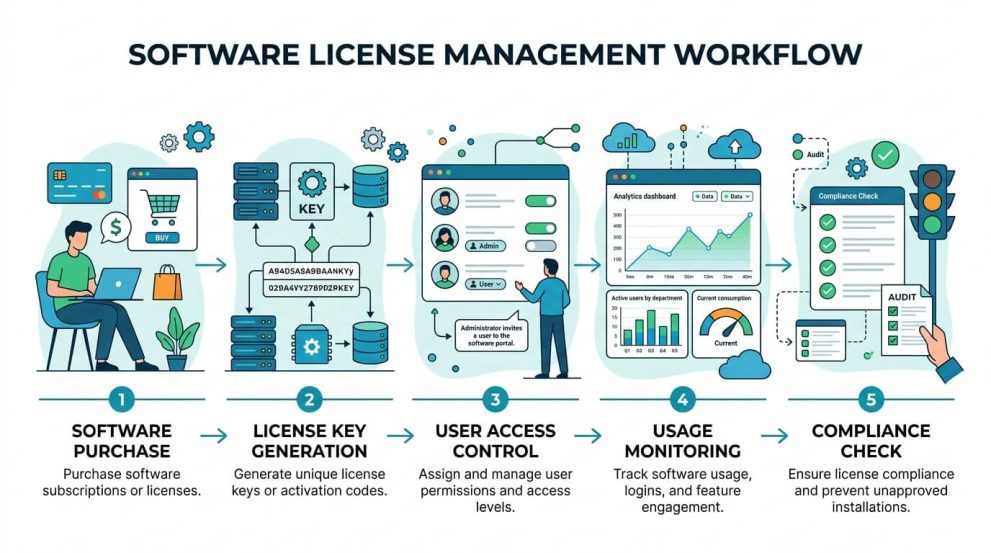
Software license management software is a specialized tool designed to monitor and control software licenses across an organization. Instead of relying on manual spreadsheets, businesses use automated systems that track every software asset in real time.

Most license management tools include several core features:

  • Automated software discovery

  • Centralized license inventory

  • Usage monitoring and analytics

  • Compliance reporting

  • License optimization recommendations

These systems scan company devices and networks to identify installed applications. Once discovered, the software compares installations against purchased licenses to detect compliance issues.

Advanced platforms also generate dashboards that visualize software usage patterns. IT managers can quickly identify unused licenses and reclaim them for other employees.

Automation plays a key role. Modern license tracking software continuously monitors systems and alerts administrators when license thresholds are approaching limits.

Benefits of Using Automated License Management Tools

The benefits of automated license management extend beyond simple tracking. Organizations that adopt these systems gain strategic advantages in cost control, compliance, and operational efficiency.

One major advantage is financial optimization. By identifying unused licenses, companies can reduce unnecessary subscriptions and allocate resources more effectively.

Automation also improves compliance. Instead of scrambling to prepare for vendor audits, businesses can instantly generate detailed reports showing license usage across all departments.

Another benefit is improved IT visibility. With centralized dashboards, administrators gain a complete view of their software ecosystem.

These insights help organizations make better technology decisions. Rather than guessing which tools employees need, IT teams can rely on data-driven analysis.

Top Software License Management Software Tools

Elite Licenser

Elite Licenser is a powerful solution designed specifically for developers and software vendors who want to protect and manage software licenses. It offers advanced license validation, product activation, and secure license distribution.

Developers often face challenges with software piracy and unauthorized distribution. Elite Licenser helps solve these issues by generating unique license keys and verifying them through secure systems.

The platform also provides analytics that allow developers to monitor how licenses are used. This insight helps businesses understand customer behavior and optimize their licensing strategies.

Flexera

Flexera is one of the most recognized tools in the software asset management industry. It provides enterprise-grade solutions for managing software licenses across large organizations.

Flexera’s platform includes automated discovery tools that scan networks to identify installed software. It also offers detailed compliance reporting and license optimization recommendations.

Large enterprises often rely on Flexera because it supports complex licensing structures across hybrid cloud environments.

Snow License Manager

Snow License Manager focuses on helping organizations gain complete visibility over their software environments. The platform tracks both on-premise and cloud-based applications.

Its analytics engine helps businesses identify underutilized licenses and eliminate unnecessary software spending.

Snow also provides predictive insights that help companies forecast future license needs based on usage patterns.

Ivanti License Optimizer

Ivanti License Optimizer integrates software asset management with broader IT service management tools. This integration allows organizations to connect license tracking with service desks, procurement workflows, and security monitoring.

The platform provides powerful automation features that simplify managing software licenses across complex IT infrastructures.

Software License Tracking Methods

Manual License Tracking

Manual license tracking is the most basic method of managing software licenses. Organizations maintain spreadsheets that record purchased licenses, installations, and expiration dates.

While this approach may work for small businesses with limited software assets, it becomes unsustainable as companies grow.

Human errors, outdated records, and lack of automation often lead to inaccurate license tracking.

Automated Software Asset Management Systems

Automated systems provide a far more reliable approach. These platforms continuously scan networks, update license inventories, and monitor software usage.

Automated license tracking software eliminates the need for manual data entry and provides real-time insights into license usage.

For organizations managing hundreds or thousands of applications, automation is essential.

Software License Management Best Practices

Conduct Regular Software Audits

Regular audits ensure that software installations match purchased licenses. Organizations should schedule audits at least twice a year to maintain accurate records.


Maintain a Centralized License Inventory

A centralized inventory allows IT teams to track all licenses in one location. This approach simplifies reporting and ensures transparency across departments.


Monitor License Usage and Compliance

Continuous monitoring helps organizations detect compliance issues early. By tracking usage patterns, companies can optimize software allocation and reduce costs.

How Elite Licenser Simplifies Managing Software Licenses

Elite Licenser offers an efficient way to manage licensing for software products and digital solutions. Instead of relying on complicated licensing infrastructure, developers can generate secure license keys and track them through a centralized dashboard.

The system verifies license authenticity during product activation, preventing unauthorized use. It also allows developers to deactivate licenses remotely if necessary.

Another key benefit is scalability. As software businesses grow, managing thousands of license keys manually becomes impossible. Elite Licenser automates this process, ensuring smooth licensing operations.

For startups and SaaS companies, this tool can dramatically simplify software license management while improving product security.

Future Trends in Software License Management

The future of license management is closely tied to emerging technologies. Artificial intelligence and machine learning are already transforming how organizations track software usage.

Modern platforms are beginning to use predictive analytics to forecast license needs. Instead of reacting to shortages, businesses can anticipate demand and adjust licensing strategies proactively.

Cloud computing will also continue reshaping license management practices. As more applications move to SaaS platforms, organizations must manage subscriptions across distributed environments.

Experts predict continued market growth as companies prioritize compliance and cost optimization. The software license management market could grow at over 14% annually, reflecting the increasing demand for advanced license management solutions.

Conclusion

Software has become the backbone of modern business operations. From communication tools to enterprise systems, organizations rely on dozens—or even hundreds—of applications to function effectively.

Without proper software license management, this complex ecosystem quickly becomes difficult to control. Companies risk overspending, compliance violations, and operational inefficiencies.

By adopting modern software license management software, businesses gain visibility, automation, and control over their software assets. Tools like Elite Licenser and enterprise license management platforms help organizations track usage, optimize spending, and maintain compliance.

As digital transformation accelerates, the ability to effectively manage software licenses will become an essential skill for every IT organization.

FAQs

1. What is software license management?

Software license management is the process of tracking, controlling, and optimizing software licenses within an organization to ensure compliance and cost efficiency.

2. Why is software license tracking important?

It helps organizations avoid compliance penalties, reduce unnecessary software costs, and maintain visibility over all installed applications.

3. What is the difference between license management and asset management?

License management focuses specifically on software licenses, while asset management includes all IT assets such as hardware, software, and infrastructure.

4. What are common types of software licenses?

Common types include perpetual licenses, subscription licenses, open-source licenses, and usage-based licenses.

5. What is the best software license management tool?

Popular tools include Elite Licenser, Flexera, Snow License Manager, and Ivanti License Optimizer. The best choice depends on business size and licensing complexity.

Subscribe

To get news about new releases, Updates, Blog Post, Deals and Discounts

Like this content? Want to share it with others

Appsbd's Other Apps

Vitepos

Vitepos

We've built a fast and easy-to-use Point of Sale system for WooCommerce. It lets you manage your local and online stores in one app, saving you time and money while ensuring a seamless experience for your customers.

Vite Rewards

Vite Rewards

Vite Rewards is a comprehensive loyalty points plugin designed to incentivize customer engagement and boost sales on your WooCommerce store. With a wide range of features, ViteRewards allows you to reward customers for various actions and interactions, creating a more engaging shopping experience.
Elite Licenser

Elite Licenser

Elite Licenser is a top WordPress license manager plugin that controls software, plugin, theme, and app activations. Its premium feature protects against unauthorized usage.
Mini Cart Drawer

Mini Cart Drawer

This plugin adds a customizable mini cart to your WooCommerce site, with an easy control panel and WP Customizer support. It also includes a sale booster that offers dynamic discounts like "Spend $20 more for a $2 discount," encouraging customers to buy more.

Vite Coupon

Vite Coupon

Vite Coupon is a comprehensive coupon management system designed to simplify the creation, distribution, and tracking of discount coupons for online businesses. This plugin integrates seamlessly with various e-commerce platforms, offering a user-friendly interface and robust features to enhance promotional strategies.

User & Kiosk App

User & Kiosk App

Vitepos User App is an addon that lets customers place orders directly, making shopping and dining faster and more convenient. Guests can scan a table QR code to view menus and order without waiting for staff. Orders are instantly processed by the Vitepos Core App, ensuring smooth workflow. The app also supports kiosk devices for efficient self‑service stations.
Member Area
Member Area

Members Area is a private section for registered users to manage licenses and view details. It also supports coupon management on platforms like AppSumo and PitchGround, with tools to create, import, export, and generate unique codes easily.
Support System

Support System

Best Support System, Best by name, Best by nature, Best by feature, it is a self-hosted customer support desk software. It handles support tickets, manages email tickets, collects any payment by PayPal.


Subscribe
Notify of
guest
0 Comments
Oldest
Newest Most Voted
Inline Feedbacks
View all comments

0
Would love your thoughts, please comment.x
()
x